

Key Takeaways
- Vaginal infections are among the most common gynaecological concerns women face in India.
- The most common types of vaginal infections are bacterial vaginosis, vaginal yeast infection, and trichomoniasis.
- Bacterial vaginosis is the most frequently diagnosed vaginal infection in India and globally.
- The colour, texture, and smell of white discharge or any other kind of discharge are indicators of what may be happening inside the vaginal environment.
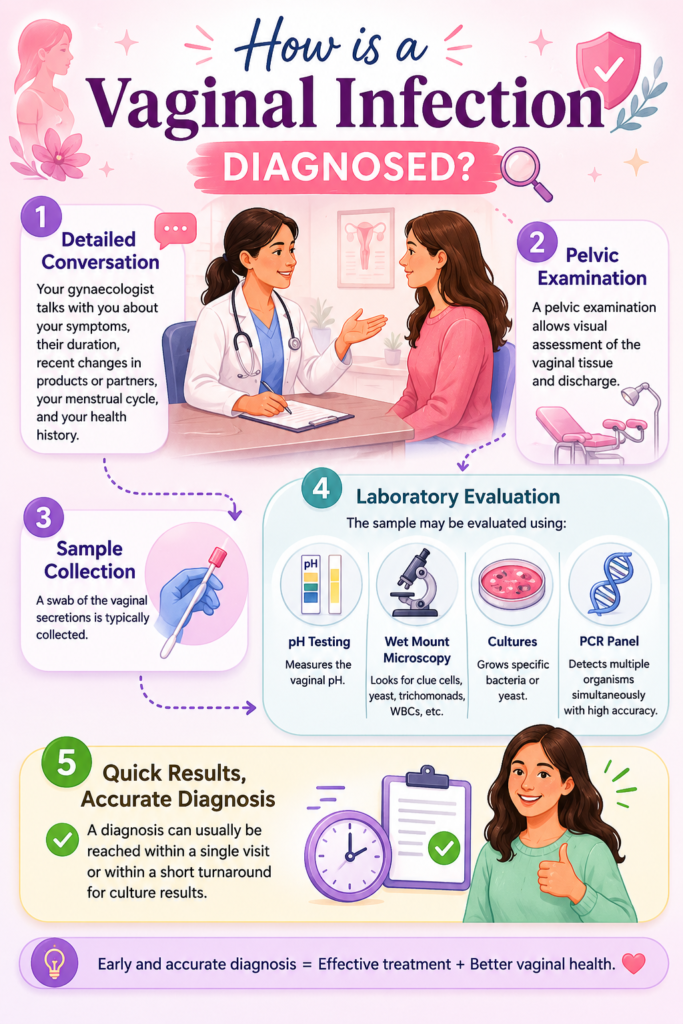
- A pelvic examination allows visual assessment of the vaginal tissue and discharge.
- The safest approach is always to get evaluated with a gynaecologist once symptoms appear.
Vaginal infections are one of the most common reasons women come to see me. They are also, and this part matters as much as anything clinical, one of the most common reasons women avoid coming to see me.
Women sit with these symptoms for weeks, sometimes months, because the subject feels too private to raise, too embarrassing to name out loud. There is nothing shameful about what you are experiencing, and there is nothing unusual about the fact that you have been searching for answers on your own.
A vaginal infection, or vaginitis, occurs when the natural environment inside the vagina is disturbed. The vagina maintains a precise pH and a specific microbiome that together keep harmful organisms in check. When something disrupts that balance, whether it is a bacterial imbalance, a fungal overgrowth, a parasite, or a hormonal change, an infection or inflammation can develop. Let’s get into detail.
The 5 Most Common Types of Vaginal Infections: What Makes Each One Different
A PubMed study conducted in Delhi found that bacterial vaginosis affects approximately 32.8% of Indian women of reproductive age, and 31.2% of those women had no symptoms at all. Trichomoniasis has been recorded in 6.7% of women presenting with vaginal discharge in India, according to a PMC India study.
The table below covers the five most common types of vaginal infections and symptoms. It is designed as an entry point, not a diagnostic tool.
| Infection Type | Main Cause | Key Symptom | Who Is Most at Risk |
|---|---|---|---|
| Bacterial Vaginosis (BV) | Bacterial imbalance in the vaginal microbiome | Thin grey-white discharge with a fishy smell, especially after sex | Women of reproductive age; those who douche or have new or multiple partners |
| Yeast Infection (Candidiasis) | Candida fungal overgrowth | Thick white discharge, intense itching and burning | Women on antibiotics, those with diabetes, pregnant women, those in hot climates |
| Trichomoniasis | Trichomonas vaginalis parasite (sexually transmitted) | Yellow-green frothy discharge, strong odour, pain during sex or urination | Sexually active women; both partners must be treated |
| Chlamydia and Gonorrhoea | Sexually transmitted bacterial infections | Abnormal vaginal discharge, pelvic pain, bleeding between periods | Sexually active women; often asymptomatic until advanced |
| Atrophic Vaginitis | Low oestrogen (menopause, postpartum, cancer treatment) | Dryness, irritation, light watery discharge, pain during sex | Menopausal and perimenopausal women; breastfeeding mothers |
Bacterial Vaginosis: The Most Common Type and the Most Misunderstood
Bacterial vaginosis is the most commonly diagnosed vaginal infection in both India and around the world. BV is not an infection in the way most people imagine it. It is not caused by a single dangerous bacterium entering the vagina from outside. It is caused by a shift in the balance of bacteria that already live there.
The healthy vaginal environment is dominated by Lactobacillus bacteria, which maintain an acidic pH and protect against harmful organisms. When those Lactobacillus bacteria are outnumbered by a variety of anaerobic bacteria, most commonly Gardnerella vaginalis, bacterial vaginosis symptoms can appear.
Common causes of this imbalance include douching, antibiotic use, hormonal changes, use of an IUD, and having new or multiple sexual partners. That last point sometimes surprises women because BV is not classified as a sexually transmitted infection. It can occur in women who have never been sexually active. The association with sexual activity is real and well-established in research, but the mechanism is not fully understood.
When symptoms are present, they typically include:
- Abnormal vaginal discharge that is thin, grey-white, and watery.
- A fishy smell vaginal discharge that becomes more noticeable after sex.
- Mild itching or burning around the vaginal opening, though many women feel nothing at all.
Something feels wrong. You do not have to figure it out alone.
Dr. Tejinder Kaur offers private, non-judgmental consultations for vaginal health concerns of all kinds. Your symptoms deserve a proper answer.
Book a ConsultationYeast Infection (Vaginal Candidiasis): What It Feels Like and Why It Keeps Coming Back
A vaginal yeast infection is caused by an overgrowth of a fungus called Candida, most often the species Candida albicans. Candida is present in the vaginal environment in small amounts under normal circumstances.
Problems arise when it multiplies beyond what the body’s natural defences can manage. This is not an STI. It is not caused by poor hygiene. It is a disruption of the vaginal microbiome, and it is one of the most common conditions I treat.
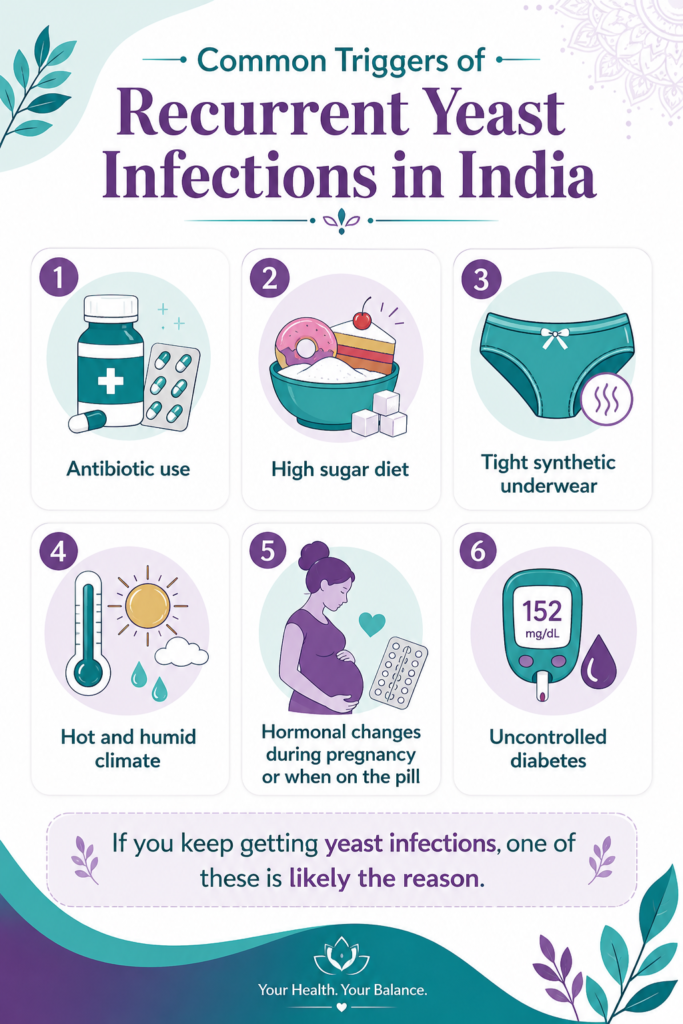
In India, the climate is a factor that I believe is significantly underreported in health content. The hot and humid conditions across much of the country create exactly the kind of warm, moist environment that Candida thrives in. Women who wear tight synthetic clothing in these conditions are increasing their risk substantially.
The yeast infection symptoms are quite distinctive:
- A thick, white discharge that is often described as having a cottage cheese texture
- Intense itching in private parts, sometimes severe enough to disrupt sleep
- A burning sensation, particularly during urination or sexual intercourse
- Redness and swelling of the vulva
When a patient tells me she has had three or four recurrent vaginal infection episodes this year, I do not simply prescribe another antifungal.
I ask about her diet, her clothing choices, whether she has been tested for diabetes, and whether she has recently used antibiotics. Recurrence is a signal that something in the underlying environment needs to change. Treating each episode in isolation without addressing the root cause is how women end up in a cycle that never fully resolves.
Trichomoniasis and STI-Related Vaginal Infections: Addressing the Stigma Directly
Trichomoniasis is caused by a single-celled parasite called Trichomonas vaginalis, which is transmitted through sexual contact. It is the most common curable sexually transmitted infection worldwide. One of the most clinically important details is that up to 50 percent of women who have it experience no symptoms at all, which means it can be unknowingly transmitted without either partner realising.
When trichomoniasis symptoms in women do appear, they typically include:
- A frothy, yellow-green vaginal discharge with a strong, unpleasant odour
- Itching, redness, and irritation of the vulva and vaginal area
- Pain or a burning sensation during urination
- Discomfort during sexual intercourse
It is also worth understanding the vaginal infection vs UTI difference here: trichomoniasis can cause burning during urination that may feel similar to a urinary tract infection, but the discharge pattern and the vaginal irritation typically point toward the vaginal infection rather than the urinary tract. A clinical evaluation is the only reliable way to distinguish them.
Regarding chlamydia and gonorrhoea: both of these bacterial STIs can cause abnormal vaginal discharge, pelvic pain, and vaginal inflammation. They are frequently asymptomatic, particularly in the early stages, which is why screening matters. If you are sexually active and have not been tested recently, that conversation is worth having with your gynaecologist at your next visit.
For trichomoniasis, both partners must be treated simultaneously. If only one partner receives treatment, reinfection occurs almost inevitably, regardless of how completely the initial infection was cleared. Please ensure your partner is evaluated before resuming sexual activity.
Having an STI does not make you a bad person. It makes you a person who needs medical care. And medical care is exactly what I am here to provide. In twenty years of practice, I have seen women delay seeking care for weeks, sometimes months, because they were frightened of what a positive test result would mean about them.
Seeking care is not an admission of anything except a commitment to your own health. That decision is always the right one.
What Does Your Vaginal Discharge Actually Tell You?
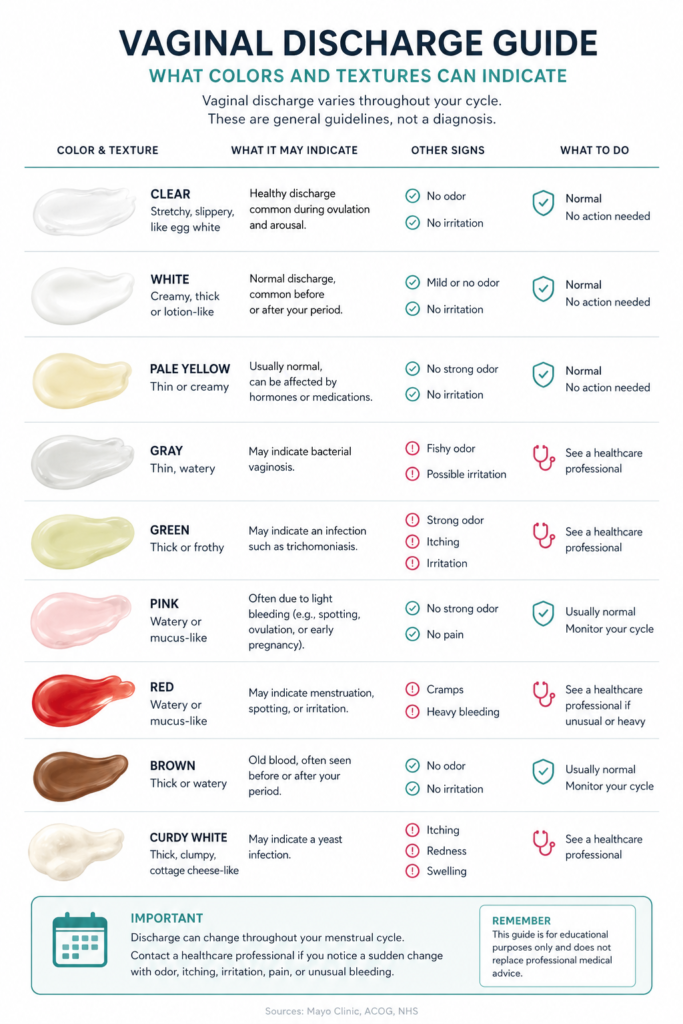
The single most useful thing I can teach a patient about vaginal health is how to read her own vaginal discharge. The colour, texture, and smell of white discharge or any other kind of discharge are clinical data. They tell me, and they can tell you, a great deal about what may be happening inside the vaginal environment.
The table below is a guide to vaginal discharge colour meaning. If your discharge fits one of the descriptions below and has been present for more than two or three days, please book an appointment rather than waiting to see whether it resolves.
Vaginal Infections During Pregnancy: Why This Cannot Wait
If you are pregnant and you notice any change in vaginal discharge during pregnancy, any itching, any unusual odour, please call your doctor that day.
Bacterial vaginosis symptoms during pregnancy are linked to an increased risk of preterm birth, low birth weight, and premature rupture of membranes. Yeast infections are more common during pregnancy because hormonal changes alter the vaginal environment in ways that favour Candida growth. Trichomoniasis in pregnancy also carries increased risk of adverse outcomes for both mother and baby.
URGENT: If You Are Pregnant and Notice These Symptoms
Call your gynaecologist the same day if you notice any of the following:
- Any change in the colour, texture, or amount of your vaginal discharge
- An unusual or new odour
- Itching, burning, or irritation in the vaginal area
- Any pelvic discomfort or pressure that is new
Do not self-treat during pregnancy. Call your doctor first.
How to Prevent Vaginal Infections: What Actually Works
Vaginal infections cannot always be prevented. But there are meaningful steps that support the vaginal environment and may reduce the likelihood of recurrence.
Clothing choices
Breathable cotton underwear and avoiding tight synthetic clothing, particularly in India’s hot and humid climate, help reduce the moisture accumulation that promotes Candida growth.
Hygiene: less is genuinely more
Wash the external vulva with warm water and a mild, unscented soap. The vagina is a self-cleaning organ. It does not need to be washed internally, and it does not benefit from scented wipes, feminine sprays, or vaginal deodorants. These products disturb vaginal pH imbalance and make infection more likely, not less.
Diet and lifestyle
Poorly controlled blood sugar is associated with recurrent yeast infections. Women who experience recurrent vaginal infection frequently find that reducing refined sugar intake has a meaningful effect. Probiotic-rich foods such as plain yoghurt and fermented foods may support the vaginal microbiome.
Antibiotic use
Take antibiotics only when prescribed by a doctor. If you have a history of yeast infections and you have been prescribed antibiotics for another condition, let your gynaecologist know. There are approaches that may support your vaginal flora during and after the course.
Safe sexual health practices
Consistent condom use reduces the risk of trichomoniasis and STI-associated vaginal infections. This is how to prevent vaginal infections that are sexually transmitted: barrier protection is the most reliable tool available.
Your symptoms deserve a proper answer, not just a Google search.
Dr. Tejinder Kaur’s clinic provides complete vaginal health assessments including swab testing, hormonal review, and personalised treatment plans. Consultations are private and non-judgmental.
When Should You See a Doctor? The Signs You Cannot Ignore
I know that many women try to manage vaginal symptoms on their own before calling their doctor. I understand why. But there are situations where waiting genuinely makes things worse, and I want to be specific about what those situations are.
Please book an appointment if you notice any of the following:
- Symptoms lasting more than three days that show no sign of improving.
- Fever alongside vaginal symptoms.
- Any unexplained bleeding from the vaginal area outside of your period.
- Pain during sex or urination that is new or becoming more severe.
- Symptoms that have returned after a previous treatment.
- A recurrence pattern of three or more infections within a single year.
- You have been notified by a partner about an STI diagnosis.
Part of Dr. Tejinder Kaur’s Women’s Health Series
Blog 1: How to Know If You Have PCOS or PCOD: Symptoms, Signs and Diagnosis
Blog 2: How Can I Get Pregnant If I Have PCOS and Irregular Periods?
Blog 3: HPV Vaccine Benefits and Side Effects Explained
Book Your Appointment at Tejinder Kaur’s Clinic
Vaginal infections are treatable. The right diagnosis, followed by the right treatment, is almost always straightforward when addressed promptly.
If you are experiencing symptoms and you are not sure what is going on, please do not spend another week uncertain. You deserve accurate answers and care you can trust.
Request an Appointment Today.
Frequently Asked Questions
Q1: Can a vaginal infection go away on its own without treatment?
Some mild yeast infections may resolve on their own, particularly if a known trigger such as antibiotic use has ended. However, bacterial vaginosis and trichomoniasis do not typically resolve without treatment and can worsen or cause complications if left alone. Atrophic vaginitis will not improve until the underlying hormonal cause is addressed. The safest approach is always to get evaluated rather than wait.
Q2: Is bacterial vaginosis a sexually transmitted infection?
No. Bacterial vaginosis is not classified as an STI. It can occur in women who have never been sexually active. It is caused by an imbalance in the vaginal microbiome rather than by a single infectious organism transmitted from outside.
Q3: Can I have more than one vaginal infection at the same time?
Yes. Co-infections are more common than most women realise. A woman can have bacterial vaginosis and a yeast infection simultaneously. This is one more reason why accurate diagnosis matters so much.
Q4: Does a yeast infection mean something is wrong with my hygiene?
No. Yeast infection is not a reflection of cleanliness. It is caused by an overgrowth of a fungus that is normally present in the vaginal environment. The most common triggers are antibiotic use, hormonal changes, and conditions like diabetes.
Q5: What is the difference between a vaginal infection and a UTI?
A vaginal infection vs UTI difference comes down to where the symptoms originate. UTIs primarily cause burning during urination, frequent urination, and pelvic pressure, without significant vaginal discharge or external itching. Vaginal infections typically involve changes in discharge, vaginal itching, and irritation of the vulvar area. Trichomoniasis can cause burning during urination and is sometimes mistaken for a UTI. A clinical evaluation is the only reliable way to distinguish between them, particularly since both can occur at the same time.
Q6: Can vaginal infections affect my fertility or pregnancy?
Yes, in some cases. Untreated bacterial vaginosis symptoms during pregnancy are associated with an increased risk of preterm birth, low birth weight, and infection of the amniotic fluid. Untreated trichomoniasis in pregnancy also carries risks. For fertility, recurrent BV and untreated chlamydia or gonorrhoea can affect reproductive health over time.
Q7: Are there safe home remedies for vaginal infections?
There are some approaches with modest evidence, and some that are actively harmful. Including probiotic-rich foods such as plain yoghurt in your diet, wearing breathable cotton underwear, and avoiding irritants like scented soaps and feminine sprays may support vaginal health and could reduce the risk of recurrence.
Q8: Why do I keep getting vaginal infections?
The most common underlying causes are uncontrolled blood sugar or diabetes, frequent antibiotic use, hormonal imbalances, immune system issues, and lifestyle factors such as diet, clothing, and hygiene products. If you are experiencing three or more infections per year, please come in for a full evaluation rather than simply treating each episode.