
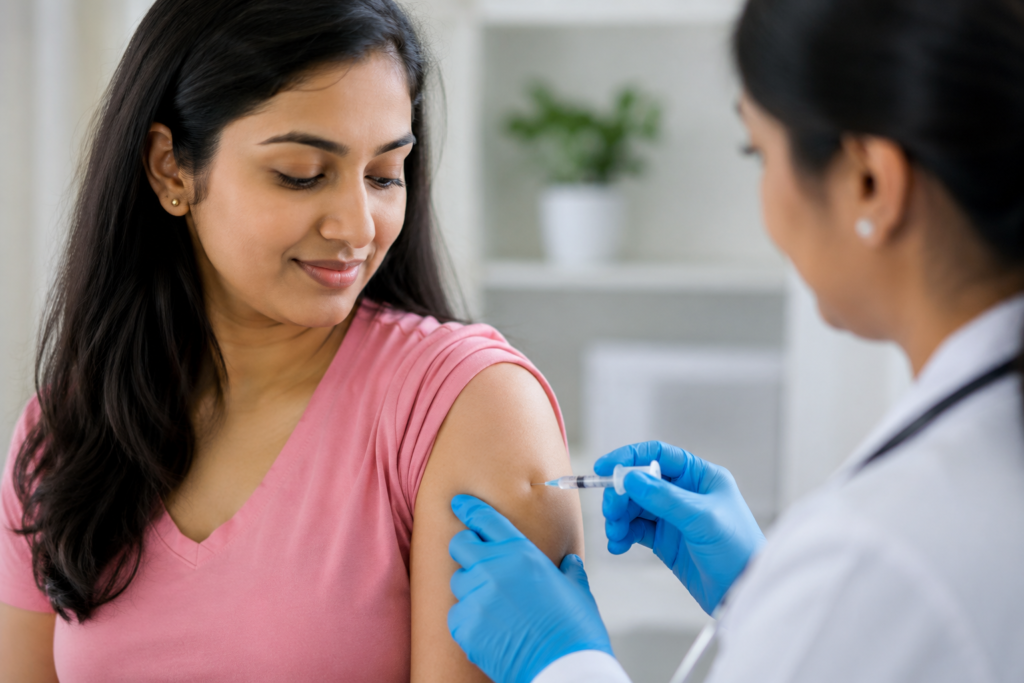
Summary
- HPV stands for human papillomavirus.
- It is a very common virus that spreads through skin-to-skin contact, including sexual contact.
- The HPV vaccine is one of the most effective cancer prevention tools available today.
- It protects against the strains of human papillomavirus most likely to cause cervical cancer, genital cancers, and genital warts.
- India has begun phased expansion of HPV vaccination programmes for girls aged 9 to 14 through government initiatives in several states.
The HPV vaccine is one of the most important tools we have today to prevent cervical cancer. I often tell my patients that this is not just another optional vaccine. It is protection against a virus that is responsible for the majority of cervical cancer cases worldwide.
The vaccine helps protect against high-risk strains of human papillomavirus (HPV), especially the types most strongly linked to cervical cancer, genital cancers, and genital warts. In India, it is recommended for girls between 9 and 14 years of age as part of the national immunisation programme, and adults up to the age of 45 may also benefit from it.
In this blog, I will explain what the HPV vaccine does, who should consider taking it, the possible side effects, and how women in India can access it.
What is the HPV Vaccine and Why Does It Matter in India?
India accounts for a fifth of all cervical cancer cases in the world, with it being the second most common form of cancer among Indian women.
India reports approximately 1.27 lakh new cases of cervical cancer and over 79,906 deaths every year. And nearly 83% of these cases are caused by just two strains of HPV: types 16 and 18.
That number should not be as high as it is. Because this is a largely preventable disease.
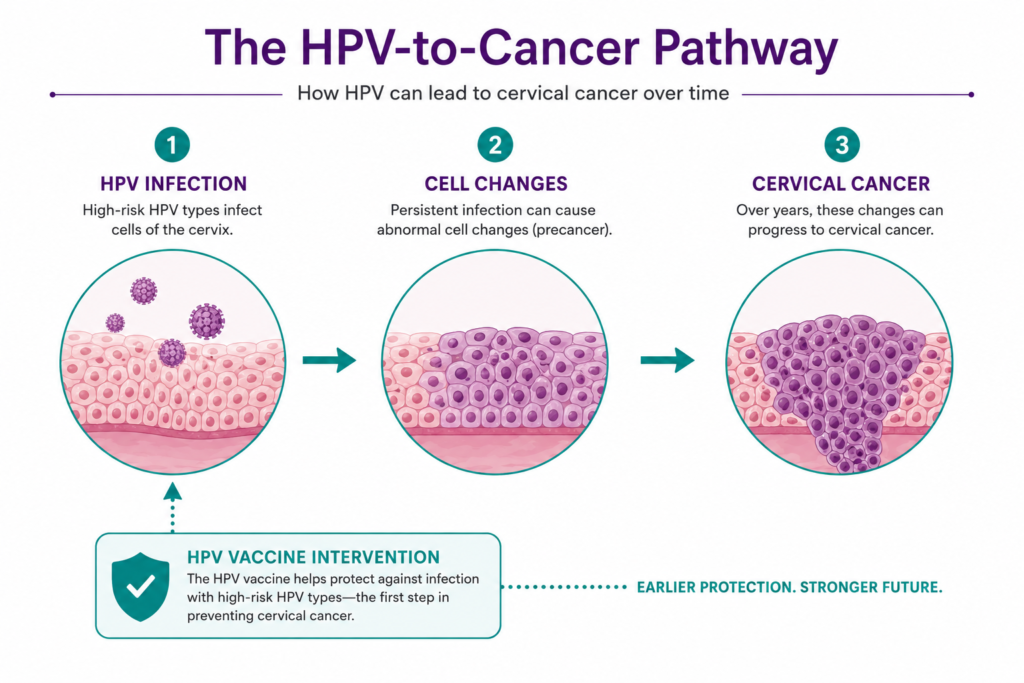
HPV, or human papillomavirus, is a highly common viral infection that spreads through close skin-to-skin contact, including intimate and sexual contact. Most people who are sexually active will be exposed to at least one strain of HPV at some point in their lives. In many cases, the body clears the infection on its own. In some cases, it does not, and over the years, it can lead to cancer.
The HPV vaccine does not treat an existing infection. It prevents one from taking hold in the first place. And that distinction is the difference between a treatment and a shield.
What Does the HPV Vaccine Actually Protect Against?
One of the most important things I explain to my patients is that not all HPV strains behave the same way. Some strains are considered high risk because they can lead to cancers such as cervical cancer, while others are more commonly associated with genital warts.
The HPV vaccine is designed to protect against the strains that are known to cause the most harm.
High-risk versus low-risk HPV strains
High-risk strains (cancer-causing)
- HPV 16 and 18: together responsible for 70% of cervical cancers globally and 83% in India
- HPV 31, 33, 45, 52, 58: together cause an additional 20% of cervical cancers
- These strains can also cause vaginal, vulvar, penile, anal, and throat cancers
These strains do not cause symptoms you can see or feel until disease is advanced. Prevention, not detection, is the goal.
Low-risk strains (wart-causing)
- HPV 6 and 11: responsible for approximately 90% of genital wart cases
- These strains do not cause cancer, but cause significant discomfort and are highly contagious
The most comprehensive HPV vaccines protect against both high-risk and low-risk strains.
The Three HPV Vaccines Available In India
| Vaccine | Strains covered | What it prevents |
|---|---|---|
| Cervavac | HPV 6, 11, 16, 18 | Cervical, vaginal, vulvar, anal cancers and genital warts |
| Gardasil (4-valent) | HPV 6, 11, 16, 18 | Same as Cervavac |
| Gardasil 9 | HPV 6, 11, 16, 18, 31, 33, 45, 52, 58 | 90% of cervical cancers and genital warts |
Important: The HPV vaccine is a prevention tool, not a treatment. If you already have an HPV infection, the vaccine cannot cure it. It protects against strains you have not yet been exposed to.
Have questions about the HPV vaccine for your child or yourself?
Dr. Tejinder Kaur, based in Mohali, offers individual vaccination consultations where she addresses your specific concerns before you make any decision.
Every consultation is a conversation, not a prescription.
Book a Consultation with Dr. Tejinder KaurWho Should Get the HPV Vaccine? Age, Eligibility and the Indian Context
The earlier the vaccine is given, the stronger the immune response. The ideal window is before any exposure to HPV, which is why the focus is on young adolescents. But eligibility extends well beyond that.
Primary target: ages 9 to 14
This is the age group with the strongest immune response to the vaccine and the highest protection. The government of India’s national immunisation programme focuses on girls aged 9 to 14 as the primary target group. Under this programme, Cervavac is being rolled out through schools and government health centres.
Two doses spaced 6 to 12 months apart are sufficient at this age. The immune response at 9 to 14 is robust enough that two doses provide the same or better protection than three doses given at older ages.
Catch-Up HPV Vaccination: Ages 15 to 26
I often meet young women in their late teens or twenties who were never offered the HPV vaccine during childhood, or who started the vaccination schedule but could not complete it. The good news is that catch-up vaccination is still highly effective in this age group.
For individuals between 15 and 26 years of age, the HPV vaccine is given as a three-dose series for full protection:
- First dose: chosen start date
- Second dose: 1 to 2 months after the first dose
- Third dose: 6 months after the first dose
A common misconception I hear in clinic is that if there is a delay between doses, the entire schedule must be restarted. That is not true. If you miss a dose or there is a long gap between appointments, you can simply continue from where you left off. The series does not need to begin again.
I usually encourage women in this age group not to delay vaccination unnecessarily, especially before future HPV exposure occurs. The vaccine works best before exposure to the virus, but even sexually active adults may still benefit because they are unlikely to have encountered every HPV strain covered by the vaccine.
Adult HPV Vaccination: Ages 27 to 45
Many women are surprised to learn that the HPV vaccine is approved for adults up to the age of 45. While the benefit is generally greater at younger ages, vaccination can still offer protection later in adulthood.
By the late twenties or thirties, many adults may already have been exposed to one or more HPV strains through normal sexual activity. This means the vaccine may not provide the same level of protection as it does in adolescents. However, it can still help protect against HPV strains a person has not yet encountered.
This is why I approach HPV vaccination after age 26 as an individual discussion rather than a one-size-fits-all recommendation.
Factors such as relationship history, future sexual exposure, previous HPV infection, immune status, and cervical screening history all matter when deciding whether vaccination is likely to provide meaningful benefit.
Do Women Above Age 26 Need a Pap Smear Before Taking the HPV Vaccine?
This is one of the most common questions I receive from patients.
A Pap smear is not required before receiving the HPV vaccine. You do not need a normal Pap smear result to become eligible for vaccination.
However, for women aged 25 to 30, regular cervical cancer screening becomes extremely important regardless of vaccination status.
I explain it this way to patients:
- The HPV vaccine helps prevent future HPV related disease.
- A Pap smear helps detect early cellular changes that may already be present.
These are two different tools serving two different purposes.
Even vaccinated women should continue routine cervical cancer screening because the vaccine does not protect against every cancer-causing HPV strain, and it cannot treat an existing infection.
In India’s public health programmes, cervical cancer screening often begins around age 30, though individual recommendations may vary depending on symptoms, sexual history, and risk factors. Depending on the situation, screening may involve:
- Pap smear testing
- HPV DNA testing
- Co-testing with both methods
As a gynaecologist, I believe the best approach is not choosing between screening and vaccination. Women benefit most when both are used together as part of preventive care.
On Vaccinating Boys
HPV vaccine for boys is recommended in most countries and is available in India. HPV does not only affect women. It causes penile, anal, and throat cancers in men, and contributes to genital warts. Vaccinating boys protects them directly and reduces transmission to their future partners.
HPV Vaccine Side Effects: What is Normal and What to Watch For
In my practice, the side effects my patients most commonly report after the HPV vaccine are soreness in the arm and a mild fever for a day. That is the immune system responding. That is exactly what it is supposed to do.
Common side effects (normal and temporary)
- Soreness, redness or mild swelling at the injection site. This is the most common reaction.
- Mild fever (up to 38.5 degrees Celsius) for 24 to 48 hours.
- Dizziness or light-headedness immediately after the injection. This passes quickly.
- Mild headache or nausea that resolves within a day or two.
- Fatigue for one to two days after vaccination.
These are signs the immune system is responding to the vaccine. They are not reasons for concern.
Rare reactions to be aware of
- Severe allergic reaction (anaphylaxis): extremely rare, occurring in less than 1 in a million doses. This is why vaccination is always done in a clinic where trained staff can respond.
- Prolonged fever or severe pain: uncommon. If symptoms last more than 3 days or feel severe, contact your doctor.
Seek immediate medical attention if you experience difficulty breathing, rapid heartbeat, or swelling of the face or throat after vaccination.
HPV Vaccine Cost in India: What to Expect and Where to Get It
Cost has historically been the biggest barrier to HPV vaccination in India. The introduction of Cervavac, developed by the Serum Institute of India, has changed that picture significantly.
Approximate cost ranges in 2026
Cervavac: Rs. 2,000 to 2,500 per dose. Two to three doses required, depending on age. This is India’s own vaccine and the most accessible option.
Gardasil (4-valent): Rs. 3,000 to 4,000 per dose.
Gardasil 9: Rs. 9,000 to 10,850 per dose. Offers the broadest protection across 9 HPV strains.
Important: These are approximate market ranges. Prices vary by city, hospital, and healthcare provider. Always confirm the current price directly with your clinic before visiting.
Government and free vaccine options
National immunisation programme: The government of India has committed to vaccinating girls aged 9 to 14 through a national programme. Rollout is being phased across states. Check with your state health department or local government hospital for availability in your area.
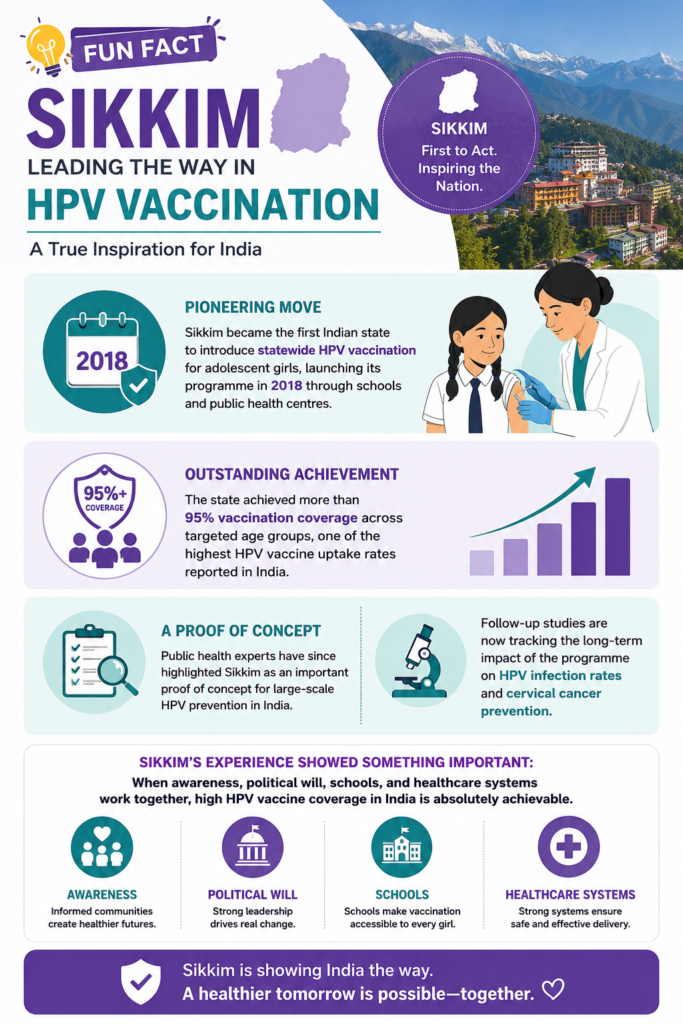
State-level programmes: Sikkim was the first Indian state to introduce the HPV vaccine in 2016 and achieved 97% coverage among adolescent girls. A Lancet study confirmed a significant reduction in HPV infection rates following the programme. Other states are following.
Insurance coverage: Some private health insurance plans include vaccination coverage as an add-on or after a waiting period. Check your policy or call your insurer before paying out of pocket.
Government hospitals: Many government and district hospitals now stock Cervavac at subsidised or no cost for eligible age groups. This is the most accessible route for families in lower-income brackets.
Prices vary by city, provider, and healthcare setting. Always confirm the current cost with your clinic or government health centre before visiting. Government facilities may offer Cervavac free or at subsidised cost for eligible adolescents under the national immunisation programme.
Ready to get vaccinated or speak to a doctor first?
Dr. Tejinder Kaur’s clinic provides HPV vaccination alongside a full women’s health consultation.
Whether you are deciding for yourself or for your child, every question is welcome.
Contact Dr. Tejinder Kaur’s Clinic in TricityMyths About the HPV Vaccine That Are Causing Real Harm in India
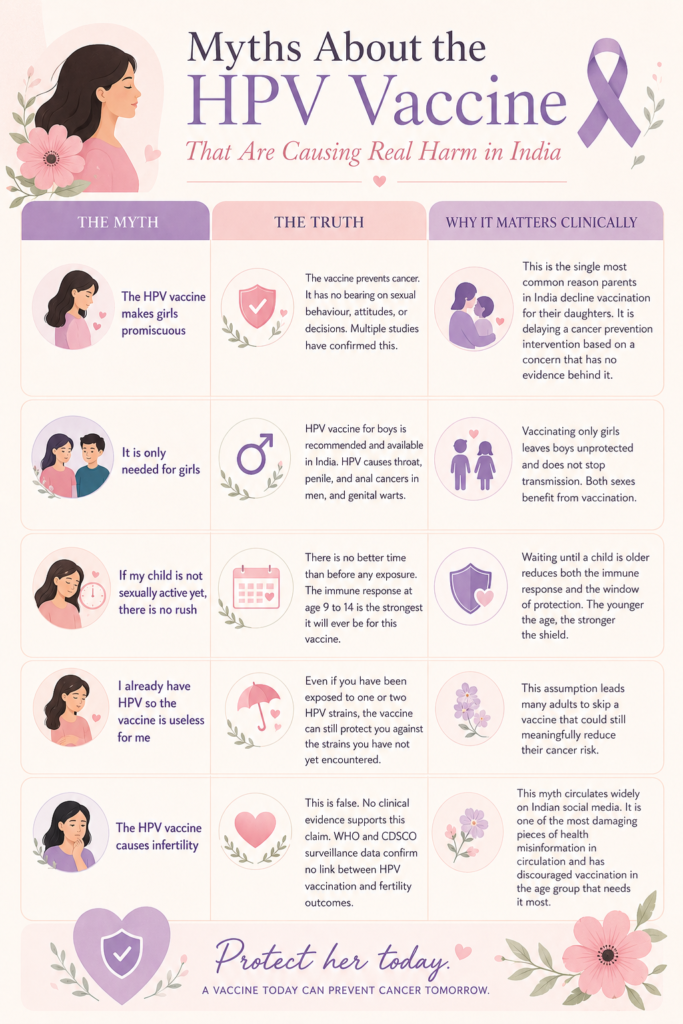
I hear each of these myths regularly, from patients, from parents, and from the general conversation around this vaccine in India. I am going to correct them with the directness of a doctor who has watched them delay protection for years.
A Final Word
Cervical cancer is largely preventable. The best time to get the HPV vaccine is before any exposure to HPV. The second best time is now. Whatever your age, whatever your history, speak to a doctor and make an informed decision.
Before you leave this page:
- If you have a daughter aged 9 to 14: ask your doctor or state health department about the national immunisation programme in your area.
- If you are between 15 and 45 and unvaccinated: a conversation with a doctor about your individual benefit is the right first step.
- If you have a son: ask about the HPV vaccine for boys. He deserves the same protection.
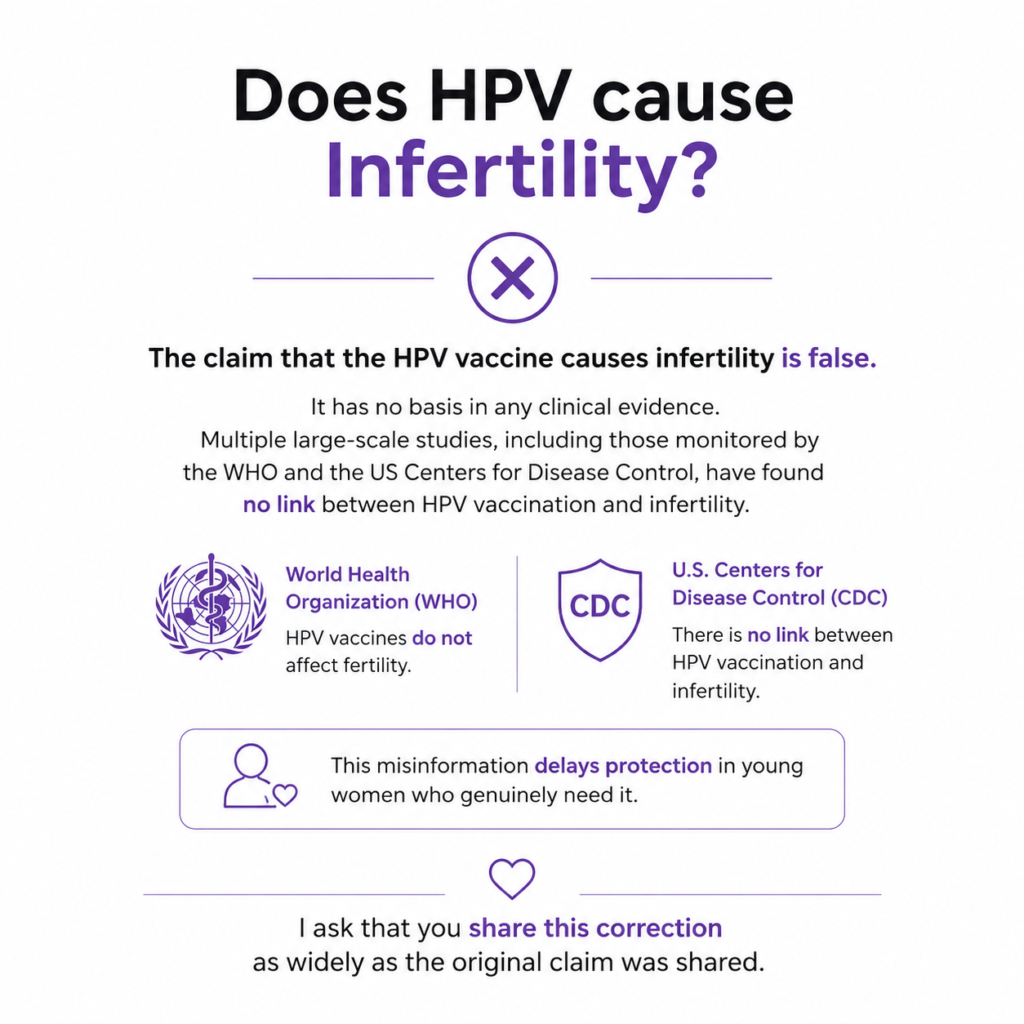
- If someone told you the vaccine is unsafe or causes infertility: share this article with them.
You do not need to navigate this alone.
Dr. Tejinder Kaur’s clinic is here to help.
Frequently Asked Questions
Q1: Is the HPV vaccine safe? What are its side effects?
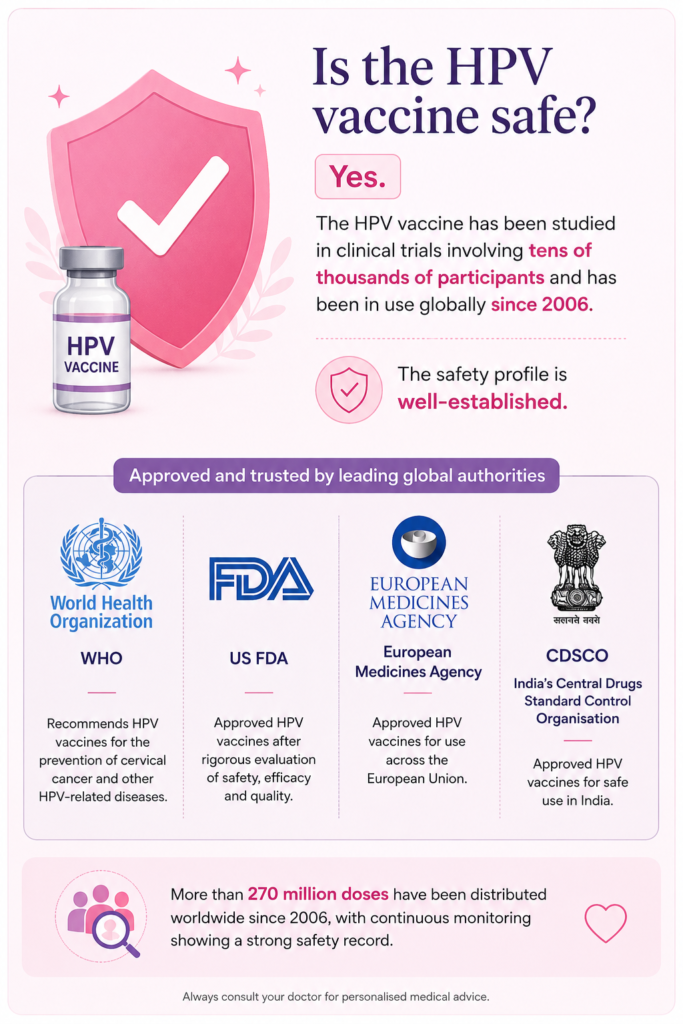
Yes, the HPV vaccine is safe. It has been studied in clinical trials involving hundreds of thousands of participants and monitored in hundreds of millions of doses administered globally since 2006. The most common HPV vaccine side effects are soreness at the injection site, a mild fever for one to two days, and brief dizziness after the injection.
Q2: What is the right age to get the HPV vaccine in India?
The ideal age is 9 to 14 years, before any exposure to HPV. At this age, only two doses are needed and the immune response is strongest. The HPV vaccine age limit in India is currently up to 45 years under the approved guidelines.
Q3: Can I get the HPV vaccine after marriage?
Yes. Marriage does not disqualify anyone from HPV vaccination. If you have not been vaccinated and are under 45, you may still benefit, particularly against strains you have not been exposed to. The benefit is greatest when given before any sexual activity, but there remains meaningful benefit for those vaccinated later.
Q4: What is the difference between Cervavac and Gardasil 9?
Cervavac is India’s own vaccine, developed by the Serum Institute of India. It is quadrivalent, protecting against HPV 6, 11, 16, and 18. Gardasil 9 is a nine-valent vaccine that additionally covers HPV 31, 33, 45, 52, and 58, offering broader protection against cervical cancers caused by strains beyond 16 and 18.
Q5: How many doses of HPV vaccine do I need?
If you are vaccinated between ages 9 and 14, two doses are sufficient. If you are 15 or older, three doses are required. The three-dose schedule runs over six months: Dose 1 at start, Dose 2 at 1 to 2 months, Dose 3 at 6 months from Dose 1. If you miss a dose, do not restart the series. Simply continue from where you left off.
Q6: Does the HPV vaccine protect against all types of cervical cancer?
No vaccine provides 100% protection against all cervical cancers. Gardasil 9 covers the strains responsible for approximately 90% of cervical cancers. Cervavac and 4-valent Gardasil cover the strains responsible for approximately 70%.
Q7: Is the HPV vaccine available for free in India?
The national immunisation programme for girls aged 9 to 14 is being rolled out across India as of 2025. In states where the programme is active, Cervavac is available free of charge at government schools and health centres. Not all states have fully implemented the programme yet. Check with your state health department or local government hospital for availability in your area.
Read more in this women’s health series:
How to Know If You Have PCOS or PCOD: Symptoms, Signs and Diagnosis
How Can I Get Pregnant If I Have PCOS and Irregular Periods?